The United States of America Economic Crisis 1990-91
Reason for the Economic Crisis
Recovery of the Economy
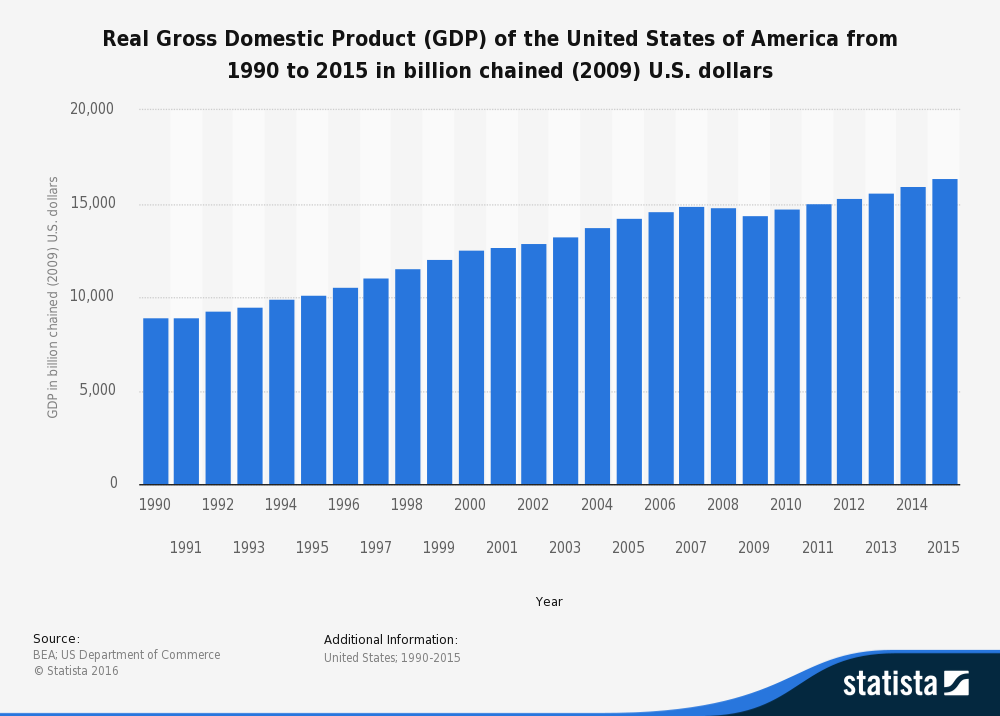
Job losses and unemployment continued to rise and peaked at 7.8% in June 1992. The GDP grew at a slow pace because of the sluggishness of the economy that year. Though this was overcome by the end of 1991 the real pace of the Economy was seen from the year 1992. Exports, which is the reason for most economic recovery had weakened due to consistent economic problems in Europe and Japan. Perhaps the largest impact of unemployment following the early 90s recession was large layoffs in defence-related industries. Defence job cut resulted in 240,000 job losses from 1990–1992, representing a 10% reduction in that sector. These job cuts also spilt over into transportation, wholesale, trade, and other sectors tied to defence-related durable goods manufacturing. For all of 1991, the United States incurred job cuts of around 860,000 jobs but it managed to create 1.154 million in 1992 and roughly 2.788 million in 1993.
Other factors that contributed to the slowing of the economy included a slump in construction resulting from overbuilding during the 1980s. Local markets in the New England states, particularly Southern California, and Texas experienced the effects of commercial overbuilding, reflected in the number of bank failures and the proportion of commercial investments held by those banks. Real estate values remained depressed throughout 1995. On top of that consumer confidence moved at an extremely unpredictable pace, limiting the surge in consumption expenditures. As a result, business concerns were reluctant to hire more than the strength of the economy.
Ultimately, the recession proved to be one of the smallest and shortest in the modern era, surpassed in most metrics only by the 2000-01 recession. The economy returned to 1980s level growth by 1993, fueled by the internet boom, low rates of Interest, low energy prices, and a resurgent housing market. Strong growth resumed and lasted through the year 2000. Although relatively mild the early 1990s recession was the only period of interrupted economic prosperity between 1983 and 2000. When considering the similarly mild early 2000’s recession, there were only two periods of lacklustre economic growth between 1983 and 2008, representing just under 25 years of relatively stable, prosperous economic growth in the United States.
Thank you, everyone,
 Economies of the world